Showing posts with label destinations. Show all posts

Wednesday, April 22, 2020

Destinations :: Manali (1993)


http://www.bagchiblog.blogspot.com

Add caption

In 1993, having slogged quite a bit in the Personnel Wing of the department, we decided to take a break and a holiday. We had covered most of the hill stations by the 1990s but we had not been to Manali. I had heard about Kulu and Manali when I was still in the College. As the trip was difficult not many would attempt it. We had a family friend who used to be a very good artist. He was most probably from Karnataka but was trained in Santiniketan when Tagore was around. He was so intensely influenced by Bengali culture that he would wear nothing other than hoti and kurta which Bengalis call
Panjabi. Having heard about the colourful Dussehra of Kulu he decided to take a trip and came back and told us about the beauty of the place. This must have been in very early 1950s.
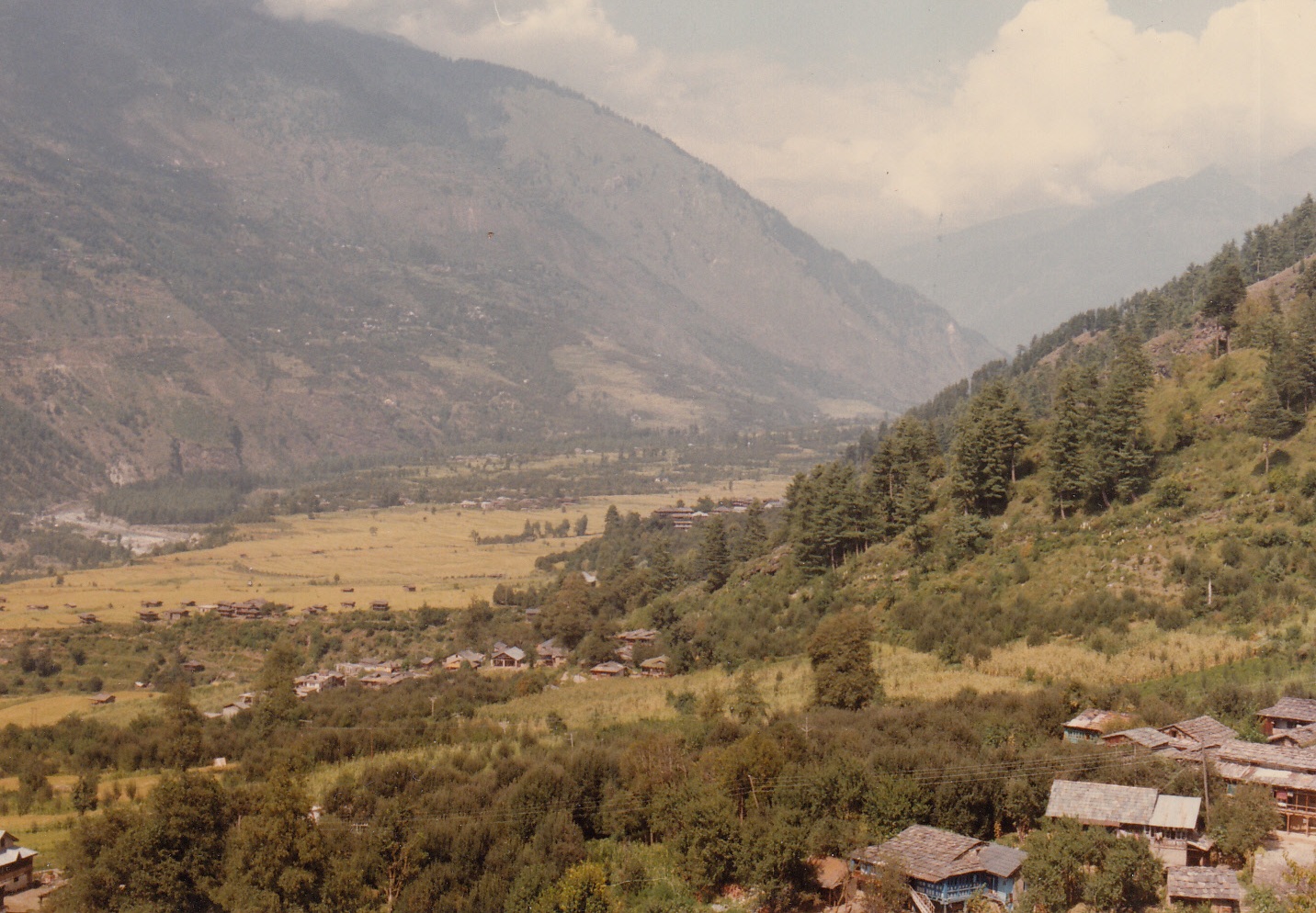
Since then Kulu Valley was on my mind but could never make it – even when I was in Chandigarh. This time we decided to spend a week there and in order to have more time there we did not take the surface route.
Indian Airlines had introduced a flight from Delhi to Bhuntar which is about 10 kilometres away from Kulu. We took this opportunity and flew to Kulu, Of course, the flight was risky as the plane after leaving the plains of Punjab had to fly between two hills. Occasionally the hillsides came pretty close to the wing tips even though it was a small turbo prop plane. Obviously the passage chosen by the pilot was narrow and perhaps was tricky. But the flight was uneventful though not devoid of anxiety.

Kulu is a temple town and was known as “Dev Bhoomi” (God’s own land). There are temples from where one can get a panoramic view of
the valley. There are numerous temples that crowd around the place – some are in the valley and numerous on the hillsides. But we were not really interested in temples and hence we pushed off straight towards Manali. On the way, however, we stopped to take a look at the trout farm. Trouts were introduced here by the British and they flourished here as well as in Kashmir. I therefore saw a trout for the first time after leaving Kashmir five years ago. I had even had a piece of grilled trout along with friends. The
farm seemed to be doing well and it had a burgeoning population of the fish.

Manali town turned out to be haphazardly built overgrown village. It is here you see the effects of unplanned urbanization. And yet it is full of foreigners, especially Israelis.  One would come across foreigners almost everywhere. I came across a white man getting a haircut and a shave in high noon by the side of what might be called a main road. The barber had nailed a looking glass on a tree trunk and had placed a chair in front with a small table by his side for keeping his instruments. A
typical rustic setting that one comes across in rural India.

There was nothing much to do in Manali except enjoying the very pleasant climate. We made a trip to the river side, the river being Beas, one of Panjab’s five rivers. On another day we walked up to the Circuit House near which there was a dense growth of trees. Manali seems to have lost a lot of trees and hence this place near the Circuit House has become a sight to be seen. The place, indeed, looks quite bereft of trees.

We had to do the very popular tourism sight of Rohtang Pass. One cannot really go across this more than 13000 ft high pass. It is open only
up to a point for tourists who want a little feel of the Alpine climate and snow laden mountains. But we came across snow fields, small though they were, very soon after we left Manali. The winter had been harsh and snow was littered all around even in late April. Himachal Tourism has provided certain places on the way for fun and frolic for children. The Pass was closed and naturally we could not approach it. Now the road through Rohtang is an alternative route for Leh but one can face a traffic jam right at Rohtang because of heavy traffic of Army vehicles, commercial heavy
vehicles and tourist vehicles. And one has to obtain a permit to travel on this road to Rohtang. Tourists get the permit for only a day.

We also took a trip to Naggar, a town on the north bank of Beas River a short distance away from Manali. It used to be the capital of Kulu State at one time. It has a castle built by the former king which is now converted into a heritage hotel. Devika Rani and her husband Svetoslav Roerich had a house here which is now a Museum. It mostly contains his landscapes. He was known also as portrait painter and his portrait of Nehru is hung in the Central Hall of the Indian Parliament.  

From Naggar I could see down below a temple in the valley. The temple was like any another temple but smaller in proportion. What was peculiar about it that it was made of slate grey stones. On the way I had seen several structures – domestic and commercial – of this grey coloured slate stones. Construction of houses with these stones would not perhaps present many difficulties but to erect a temple, complete with its pointed spire, must have been very a labour intensive process hundreds of years ago


Sunday, April 12, 2020

Deatinations :: Dar es Salam (1992)


http://www.bagchiblog .blogspot. com


Mt. Kilimanjaro as seen from Moshi
We took off from Nairobi and after sometime were flying by the snows of Kilimanjaro. We could see the peak from the plane – it was largely flat and at places green with some snow around. After around an hour the plane landed at Dar es Salaam airport. I was put up at Ambassador Hotel that was just about better than ordinary but nowhere near the Panafric Hotel of Nairobi.

 Tanzania is made up of the former Republic of Tanganyika and the former Republic of Zanzibar. The two joined together to make a viable country. As I was taken to the Postal Headquarters I could see lack of development though the roads had been asphalted by Japan about three years back.

 The Postal Headquarters was I think a fourteen storied building that presumably was a gift from a friendly country. I had to go to my counterpart on the 12th floor. Out of two only one lift was functioning. I waited for the one that was working. I saw on the panel above the lift doors the lift coming down stopping at every floor. As it hit the ground floor and the door opened a mass of humanity seemed to have been expelled from it. Taking into account the number people waiting for the lift I refrained from joining the pull and push to get into the lift. I decided to climb the 12 floors taking breathers on every other floor. I am normally scared of lifts and if these are crowded they are all the more inconvenient as they give me claustrophobia.

At the age of 50 climbing 12 floors is quite a job though I once climbed 13 floors after having escaped a severe injury in a stalled lift in Sanchar Bhawan in New Delhi. But that was when I was a few years younger. Huffing and puffing I made it to the 12th floor. My counterpart offered me coffee that was very welcome. He introduced to me a gentleman who would take care of me and help me in my work.

We started with a visit to the main office of exchange in Dar es Salam, Dar for short. Getting the hang of what needed to be done I later moved from office to office. Thankfully they had placed at my disposal a Suzuki Vitara.

It was a small postal organization and its traffic with foreign postal organizations was limited. There was another office of exchange of mails at Arusha and a third one in Zanzibar. Arusha is somewhat close to Serengeti National Park. For Zanzibar one had to take a hovercraft from Dar but frequent breakdowns reportedly did not allow it to come back to its base in Dar. I, therefore, chose to go to Arusha. Though there is a flight from Dar to Kilimanjaro Airport only 50 kilometres away from Arusha the Administration booked my travel on a bus along with an officer. The bus trip turned out to be of more than 12 hours and we reached Arusha close to midnight.

Next morning Director Moshi arrived at the hotel. He was in-charge of the operation in the region including Arusha and Moshi. As it was a Saturday the office was not open. I had, therefore, to extend my stay by one day. I lost another day as they did not get tickets by air for Dar. I had refused to travel back by bus. The extra day I spent in working with Director Moshi. I did as detailed a survey as possible of the routes that are being used. The officials complained that their mails for Europe were being held over at Nairobi and hence being delayed in transmission. I flew back to Dar and spent another day with my counterpart for discussions. Their chief also told me that they were not happy with the way and the tardiness their dispatches were being treated by Kenya Post. He wanted me to intervene to rectify the situation.

After a fourteen day halt I was ready to leave for home via Kenya. Despite being so near Masai Mara and Serengeti I could not visit any of the famed game parks. Somehow my counterparts slipped in the matter. They should have planned for it. When any UPU dignitary visits Delhi for short length of time he is always taken around Delhi, Agra and Jaipur – the Golden Triangle. These administrations obviously had no such tradition.

Wednesday, April 8, 2020

Destinations :: Nairobi (1992) - Mombasa


Http://www.bagchiblog.blogspot.com


Malindi beach
We hit the highway for Mombasa around midday. From Nairobi the distance was a little more than 500 kilometres from Nairobi but the driver said he would be able to cover it in five hours. True enough we arrived at the White Sands hotel a little before 5.00 PM.

The highway was very good and we maintained a speed of a little more than a hundred kilometers all through. It had traffic warnings, “safari salama” in Swahili language but written in Roman script on big hoardings planted at frequent intervals. The highway ran parallel to the famous Nairobi – Mombasa metre gauge track on which the Kenyan Railways used to run their well known luxury train. The train was reported to be like the one that plied between Kuala Lumpur and Singapore where they used to serve, inter alia, Earl Grey tea at one time. The train had provision for looking out for game on its two sides as the track seemingly cleaved the two game parks of Amboseli and Tsavo. The highway too did likewise but since the railway coaches are on a higher level the passengers are able to see giraffes and elephants – the tall animals for which the parks are ideal habitat. The highway being on a lower level offers only an occasional impala or a zebra that happened to cross the road. Tall grasses of the expansive grasslands shroud the animals from view.

As we drove down the highway we could see Mount Kilimanjaro on our right with its peaks covered by snow. This is the only mountain in Africa that gets snow. The setting reminded me of the film “The Snows of Kilimanjaro” of 1950s starring Gregory Peck, Ava Gardner and Susan Hayward. The film was based on Earnest Hemingway’s novel of the same name. I cannot forget the last scene where a tired and sick Gregory Peck languorously sits on the grassy ground leaning against a tree trunk below the snow-capped Kilimanjaro as a vulture circles overhead.

We arrived at the hotel a little before five in the evening. It was a very luxurious hotel – very well appointed and very good food, western as well as Middle Eastern. The beach was next door and indeed it was a good and clean stretch of beach with, curiously, white sands. Later I found white sands all along the Western coast of Africa, that is, wherever we happened to go.

Mombasa has had a chequered history. It has changed hands several times. Only when Vasco da Gama, the great Portuguese sailor and adventurer went up and down in search of India he came across Mombasa, a bustling commercial port that he thought of capturing it. Even the rule of Portuguese was not stable as the British were out to expel them from the port. They succeeded in doing so and eventually they received the town on a platter from the Sultan of Zanzibar who nominally controlled Mombasa after being defeated by the British. It soon became capital of British East African Protectorate. The English influence that one comes across is because of a pretty long spell of British Rule.

The interior of the town is quite filthy and crowded. There are a number of mosques as the town was in possession of Omani Sultans. We did our work and visited offices. Only surface mails were being routed out of the country through Mombasa. An international airport came up much later. We used to lunch at the hotel as the food used to be delicious. I found most of the waiters wearing very colourful printed shirts that had heavy African embroidery right around the neck and along the front openings for buttons. On being told that these were known as Kitange shirts and were available in the market I looked for them in Nairobi and bought a few. 

Having come all the way I could not leave the place without visiting Malindi, a town about 100 kms away. I had heard about it so much. It is also a port town and had attracted European attention. Vasco da Gama during his voyages on the African west coast knocked several times on the doors of Malindi. Eventually he was successful in breaking through the African resistance and establish a Portuguese trading post and he also procured a guide who would show him the way over the Indian Ocean to India.

 Like Mombasa Malindi too had a chequered history and was alternately ruled by Omanis and Swahilis and therefore a large section of the population is Muslim. During the World War II it was bombed and was later hosted a PoW camp. Today Malindi is a tourists’ paradise with blue seas and white sands. The sands are so white that they dazzle the eyes when the sun is out. Exotic lobster-based food is served on the beach.

Next morning when it was time for us to leave our UPU Regional Consultant expressed a desire to be driven through the Tsavo National Park. So we drove through the Park – mostly through tall grasses over which we could spot a few tall necks of giraffes and the humps and the backs of elephants. All other small animals like antelopes, hyenas, jackals etc, were successful in hiding themselves from view. An ordinary, everyday automobile is not good enough for safaris. One needs to be at an elevation, say like on elephant back to view the animals in their natural environment. Anyway it was quite an experience to drive through Park. 

The day after our return was the last day before my departure for Dar es Salam. I went and met the top bosses of Kenyan Post to brief them about what we had done. As I came down to the DDG’s deputy’s room where we had done all the work an officer came and told me that the DDG wanted us to go to Nakuru. We piled into a car and drove for around two hours before hitting Nakuru. It is a typical colonial town having been established during the colonial era. Its elevation of more the 3000 ft gives a temperate climate all round the year. It is more famous for the Nakuru Lake where hundreds of thousands of flamingoes gather creating a splash of white on blue waters of the lake. It is a sight for the Gods.

(Concluded)


Thursday, March 26, 2020

Destinations :: Addis Ababa (1992)


http://www.bagchiblog.blogspot.com


An old monument
I was picked up by the Universal Postal Union for a three-country assignment in Africa.  This was in 1992 and, for a change, I was asked to proceed first to Addis Ababa via Berne, Switzerland. On previous two occasions I was asked to proceed directly to the country where I was supposed to operate. This time they wanted to “brief” me. Briefing, however, amounted to asking me to carry quite a bit of literature, most of them being useless for me.

Though Berne, ike every other place in Switzerland is a beautiful city yet I had decided that I would not be staying at Berne as my late eldest brother was stationed in Geneva. The question of giving up an opportunity to stay with him for a couple of days did not arise. Besides
A mosque
, Berne was only around two hours away from Geneva by train. My brother was at the airport when I flew in from Delhi via Frankfurt. I was back in Geneva after five years, having been here in 1987 with my wife and late third brother and his wife. We had spent almost a couple of months here during which we travelled quite a bit in Europe.

After two very pleasant days I was set to move for Addis. I had to again fly via Frankfurt and take the flight of Ethiopian Airlines for Addis. Its stock was pretty low with my brother but there was nothing I could do about it. The flight that night from Frankfurt was the last to fly out. We started boarding when the airport cleaning brigade was already on the job. The flight touched down in Rome and then at Asmara, which till then
An animal commercial carriage
was a part of Ethiopia in the province of Eritrea but was fighting for independence.  Eventually after a brief civil war the country became independent. Asmara was known to be a very beautiful sea port on Red Sea and had a lot of traffic with Italy. No wonder hordes of Italians climbed into the plane only to get off at Asmara.

The representatives of Ethiopian administration came and received me and lodged me in Hotel Ethiopia. It was a very ordinary hotel with virtually minimal facilities. Probably that was the best around the town but I couldn’t have had any say in the matter. The country had just come out of a dictatorial Leftist rule of Mengistu and I could divine an environment of fear still prevailing all around. It was Mengistu who hadA Convention Centre
 overthrown in the 1970s the Emperor Haile Selassie of the Solomonic dynasty. The Emperor traced his lineage from the legendary King Solomon and Queen Sheba of Biblical times. His relations with India were very cordial.

My Ethiopian colleagues
Though the departmental headquarters were not very far from the hotel I used to be picked up and deposited back at the hotel promptly at 5.00 in the evening. It seems none would work at the office after office hours as commuting through the streets was not very safe. The first day my counterpart took me to meet the Chief of the Ethiopian Post. He used to sit in a spanking new what looked like a building of aluminium. Perhaps, this was a donation from a friendly country. Together with the chief, I had good discussions over cups of Ethiopian coffee. They take black pretty strong black coffee with a sprinkling of a herb that floats on the top of the coffee giving it a peculiar pleasant aroma. No wonder there is quite a bit of traffic in coffee between Ethiopia and Europe.

The road in front was an artery of sorts and was always very crowded. People in tattered clothes would be sprawled on the central verge. It was like India when we had a substantial population of beggars. One day when I decided to walk to the office I got a taste of it. These people were all Somali refugees occupying the pavements and they would beg rather aggressively; they would nudge you, push you or even catch hold of your hand to beg. I told Mr. Mohammed, my counterpart, that after this experience walking to office was out for me.

A monument
My job in Ethiopia, as indeed in the other two countries, was to guide the local administration in finding new routes or new air services with a view to speeding up of the foreign mails. Certainly not a big job but this had not been done for quite some years. So together with the loca l administration and a newer version of airlines directory we devised a more or less improved schedule of receipt and dispatch of foreign mails subject to the approval of foreign administrations concerned. Since it had no railways of its own, the surface mails from abroad would arrive from Djibouti. Promptness or otherwise of it all depended on the political situation in Djibouti. It was pretty unstable during my stay in Addis Ababa, vital, as it was, sitting on very busy sea lanes passing through the Gulf of Aden.

In a Nazareth restaurant
I was given a round of the city and also visited some of the town sub offices. There was nothing distinctive about them. The city was, however, littered with some Communist-style structures. A big stadium was left incomplete despite apparent expenditure of millions. The town was, however, more like our sub-urban towns. After 1992, however, things seemed to have improved. There are high rises, overpasses and a light rail operating in the city. There are massive squares in the town and economic activities apparently have picked up.

Bayen, who was my companion during my stay, took me out to Nazareth (also spelt as Nazaret) a place around 50 miles away. It is on a highway originating in Djibouti. It is considered to be a transportation hub and is predominantly a Christian town. Bayan took me to a restaurant where we had some good Western food. Bayen used to be a senior official of the department but for lack of prospects he was looking for an opportunity to migrate to Canada. I understand he has since been able to get away to Canada.

A typical street scene of Ethiopia of those days
The night before I was to leave for Nairobi Mr. Mohammed invited me to a dinner in a bigger hotel. Two other officials were also present. It was a typical Ethiopian dinner with the foursome sitting round a circular cane table with high rims. On it was spread the Ethiopian flatbread which is used as a plate for stews, vegetables and salads to be deposited on it. The diners sitting round it tear a piece of the bread to scoop out a morsel. There were around three or four entries. Mr. Mohammed, however, warned me about one which, he said, was half-cooked beef and might not be to my liking. Hence, I left it out.

After two pleasant weeks it was time for me to move again, this time to Nairobi. Climatically both are more or less the same, though Addis sits at an elevation of more than seven thousand feet against Nairobi’s almost 6000 ft elevation. Both are, therefore, cool and one has to use woollens. Nairobi, however, is much greener than Addis Ababa. 

Friday, October 11, 2019

Destinations :: Salzburg (2004)


http://www.bagchiblog.blogspot.com

Salzach River flowing through Salzburg
Who can ever forget the Academy Award winner film Sound of Music? Though Salzburg is named after the salt it used to produce it is also known for music. Mozart was born here and in recent times the movie Sound of Music was filmed here.

Only two and a half hours away by train from Vienna day-tripping to Salzburg is easy. Several trains leave from Vienna for Salzburg during  the day. We caught one from Westbahnhof (the Western station in Vienna). We had got off here in 1987 when we travelled from Munich to Vienna.
Mirabell Palace in the background
A large number of day-trippers take the train in the morning. Young men and women seem to carry their bi-cycles along as I noticed a whole bogey dedicated to stands for bi-cycles. Salzburg is on or close to the foot of Alps and hence it has its ups and downs that should be difficult for cyclists. For young people, however, that does not seem to be an issue.

Salzburg Tourism has done a good thing by organizing a tourism counter right on the platform. It is a great help for the day-trippers who have very little time in hand to go round the place. Quite a lot of time is taken to travel from Vienna and back– almost 5 hours consuming the best part of the morning. We bought tickets for a package of sight- seeing by a tourist bus.

Baroque architecture
It was a whirr. I do not remember much of what we were shown that mostly had a lot of Mozart, the Abbey and a few baroque structures after which we were dropped on a square for wandering around. Yes, we had a bit of Sound of Music in our itinerary which was the Mirabell Palace, an imposing neo-classical structure by the side of the Salzach River that flows through the city, its waters eventually draining into the Danube basin. The Palace has some exquisitely laid gardens. It is located in the Historic Centre of Salzburg and is a World Heritage Site. Mozart used to play here when he was a child and the song “Do Re Mi” of the film Sound of Music was filmed in the gardens of this Palace. The Palace is also associated with Adolf Hitler whose wife Eva Braun got married here to a senior Nazi official.


The Square that we were dropped in is also a World Heritage Site with
A Salzburg street
period buildings all around. In one of these buildings somebody was running a restaurant. We climbed up as it was an outfit on the first floor offering a fine view of the Square below. We had whatever looked palatable to us, relaxed for a while and got back to the bus for our return trip to Vienna. So, that was it – short and crisp.


Thursday, September 26, 2019

Destinations :: Praha (2004)


A square in Prague Caste area
Having come so close it seemed it would be a pity if we did not take a shot at Praha (Prague), now capital of Czech Republic. Czech Republic was established in 1993 before which it was federated with Slovakia. Many would have heard of Bohemia. Well, it was virtually the original name of the current Czech Republic having been known as the Kingdom of Bohemia for about 900 years since the 12th Century. Praha is known to be cultural, economic and political centre of Central Europe.

About 350 kilometres away from Vienna and yet, given the quality of
Prague Castle
roads, it takes little more than three hours to reach the place. There is a brief halt for immigration check at the Austrian border and another at a small town by the name Brno (pronounced Bruno). As we got to Prague our bus crossed a river went up a hill and unloaded us at the Prague Castle.

The castle is the biggest medieval residence of kings and the rulers of Europe. It was so of what was once a kingdom and later a state ruled by communist governments and elected presidents. Spread around 50 acres it has some architectural marvels, historical palaces, reception
On way to Charles Bridge from Prague Castle
halls, offices, stately rooms, churches, buildings, fortifications and gardens. I happened to peep into one hall and what a beauty it was! Since it is more than a thousand years in age, the complex has had the benefit of all the architectural styles, from Romanesque to Renaissance, Gothic and Baroque. Hence, in one snapshot one is able to see almost all the styles. The Gothic St. Vitus Cathedral is an architectural marvel the construction of which was commenced by King Charles in the 14th Century.

Unfortunately for the Prague trip we did not get a more considerate
Prague Castle - ancient and modern
guide. He led us through the milling crowds of tourists with his hands raised holding probably a hanky. Many a time we lost track of him. Whatever we saw was on our own initiative and we were never told the names of the buildings and complexes, they are so difficult to remember, anyway.

So we generally followed the raised hand with a hanky that was fluttered by the gentle breeze and walked on. The Presidential complex is so enormous and has such beautiful structures all around that we
On the Charles Bridge
were generally in awe. While there were narrow lanes, there were also huge open spaces like Italian piazzas of magnum sizes surrounded by beautiful architecture. In the midst of all these we were herded through the crowd to another architectural marvel – more than 600 years old Charles Bridge named after the King Charles (was it?) IV. The Bridge is on River Vltava – the very River that we crossed by the bus before being unloaded – connecting the Prague Castle with the Old Town. It also became an instrument of faster trade between Western and Eastern Europe. The bridge has some fine statuary; around 30 beautiful statues adorn its sides. They are supposed to be more than 150 years old.  

We crossed over to the Old Town as we were told that the bus would be
Skyline of Old Town
available from somewhere near the Old Town Square. We had a bite before we commenced looking around

St. Vitus Cathedral
There was too much to see as we were in the Historic Centre of Prague – the World Heritage Site. The cobbled streets, the magnificent structures, the ancient clocks, etc. were captivating. No wonder the city is known as Mother of Cities or the Golden City or the Heart of Europe. We, as usual hardly had any time to give the place a good, hard look. Traditionally a cultural Centre of Europe the city hosts a number of theatres and has the reputed Prague Philharmonic Orchestra and Prague Symphony Orchestra. There are museums galore and a number of art galleries, hundreds of concert halls. Outsiders flock to the place in large numbers to satiate their appetites for the varied fare that is on offer.

St Nicholas Church
The Old Town Square is famous for two beautiful churches – one Gothic and the other Baroque. The Square is where they used to have executions during the rule of the Hapsburgs. The Square is also famous for the reason that the Czech novelist and story teller Franz Joseph Kafka used to live somewhere near here. Another thing; here in Praha I have seen Skoda cars in numbers that I had never seen before anywhere else in Europe. Skoda had not been in India till then.

Prague is one of the most beautiful towns we have ever visited. If we ever get back to Europe again Prague is the place where we would like to spend most of our time.
 
 
Old Town Square

Wednesday, September 11, 2019

Destinations :: Budapest (2004)


https://www.bagchiblog.blogspot.com

Hungarian Parliament on the Danube

We were in Vienna for a fortnight taking in its sights and sounds. Of the neighbouring towns, we had already visited Baden – a city that is accessible by tram from Vienna. After a brief respite of a couple of days we planned a day-long trip to Budapest which was only around 200 kilometres away. Austria and Hungary are neighbours and, in fact, during the times of Austro-Hungarian Empire they were one and the same country. In 2004 when we visited Vienna Hungary was yet to join the European Union and hence we had to have a Hungarian visa to visit Budapest.

We got on to a bus one morning which took us to Budapest. On the
Hero's Square

way there was nothing much that was interesting except the over-bridges that were built for wildlife to cross over from one side of the highway to another. Unlike India, Austria has only some small game; some species of antelopes, rabbits, foxes, etc., but the country takes care of them howsoever they might seem insignificant to most of us. They don’t want whatever they have to be crushed under the speeding wheels. Elaborate arrangements have been made to keep them away from the highway and to guide them on to the over-bridge in the event of their inclination to go across the highway.

One of the several national galleries
Perhaps a word about Hungary is necessary here. It is a country in Central Europe in the Carpathian Basin. At one time it was independent, later it came under the Ottomans before being tagged on to make the Austro-Hungarian Empire of the Habsburgs. The Empire was lost as the World War I came to an end. During the inter-war years Hungary joined the Axis powers only to be with the losers. In the post-War rearrangement Hungary became a Soviet Satellite. During its “Satellite Years” Hungarians revolted against the harsh rule imposed on people. I vividly recall this uprising as it would be reported in the newspapers in 1956. This was my introduction to Hungary as I read about Soviet tanks rolling into Budapest, more specifically Pest. The
The millennial tower
uprising helped in opening the closed border with Austria. It was partially instrumental in collapse of the Soviet Union. The country soon became democratic and became a member of the European Union in 2004 even as we were in Vienna.

Our first stop was at Hero’s Square which is an important feature of modern Hungarian history. The central feature of Hero’s Square is the Millennium Memorial construction of which began in 1896 to commemorate the thousandth anniversary of the conquest of the Carpathian Basin and the foundation of the Hungarian state. The Square is noted for its iconic complex of statues of Magyar leaders and other important national leaders. It is also the re-burial ground of Imre Nagy who became the leader of the Hungarian Revolution that was suppressed by the military in 1956. Nagy was arrested, tried and hanged secretly by the then Communist Hungarian regime.

The President's Palace with its bullet marks
 As we moved around on the Square my wife was collared by a Roma who was pushing her crochet work. The work was of great quality and the price was also steep – beyond the grasp of a shoe-string budget tourist. Roma’s, as is well known are ancient migrants from Rajasthan in India and are spread all over Europe and are generally badly treated.

We were whisked in the bus to the Castle Hill and dropped somewhere near the climb on to the Hill. The approach gave us a view of the other side of the Hill – green, fresh and refreshing bathed as it was the late morning sunshine. We had also saw a bit of the President’s Palace – an
The Chain Bridge
imposing building of fair proportions. Then we were taken through a dark area known as the Lions’ Courtyard that presumably had been scene of some action during 1956 uprising. Some bullet wounds were still visible on the external walls of this government building.

As they say the Castle District gives an architectural history lesson to the passers by. As one walks through it one finds some exquisite examples of medieval, neo-classical and baroque architecture generally in good repair. We walked past many of them. The most attractive was the spire of the Mathias Church with its many pinnacles. Virtually next door is the
A view from Savoy Terrace
19th Century refurbished Castle Garden Bazaar which has some attractive looking theatres and exhibition halls.

From the Castle Hill one can descend to see another marvelous sight that is offered by the Chain Bridge. Numerous Hindi movies were shot here. But that is beside the point. A walk across it is a wonderful experience with the fantastic Hungarian Parliament on one side and the Buda Castle Hill brooding over the mighty Danube flowing below. The best time to visit the bridge is early in the morning when the tourists are yet to start off on their trips. The time we were on it past midday (we couldn’t have helped it as we came in from Vienna) the place was crawling with tourists.

Back again on the Buda Hill the guide took us to a pavilion on the
Mathias Chuech, Buda
escarpment of the Buda Hill – known as The Savoy Terrace. From the Savoy Terrace, supposedly one of the most representative areas of Buda, one gets an excellent view of the town of Pest and the sweep of the famous Danube River with a fabulous view of the Parliament building across Danube.

 Here we were joined by an elderly Roma lady who too, like the one on Hero’s Square, was pushing her products of crocheted work. She was a friendly woman and told the young girl who was our guide how difficult it was for her and others like her to survive. She told us that they lived across the border in Romania and every morning they climbed into a train for Budapest and clear out of the town before night-fall. Their pickings are measly as they are constantly shoed away from anywhere near the tourists. Hers was a pathetic story. Romas are generally ill treated in most of the European countries.

In a cafe in Buda
From Buda we were brought down to Pest and were dropped in front of a massive Synagogue – reputed to be the biggest in Europe. As we had a brief peek inside we realized that Cochin Synagogue was no match for it. It is indeed enormous and immensely decorated.
The bus after picking us up from the Synagogue dropped us at Hungary Restaurant. Here on offer was Hungarian Goulash and bread. I had come across mention of goulash in Russian novels but never had the occasion to taste it. So, we ordered goulash and Hungarian bread for both of us.

The restaurant was located in a building of immense proportions and
The Parliament building
was very well appointed. We seemed to be rather early for lunch as many other tables were still unoccupied. Our waiter was trying to push a Hungarian wine and we ordered two glasses taken in by what he told us about it. Not that either of us was connoisseurs of wines but, to be neutral, it was perhaps proper to say that it was good. But the best was goulash which was served in generous quantities in bowls and tasted like Bengali meat preparation. Both of us liked it and needless to say, we lapped it up. It was followed by ice cream that too was pretty good. After the hearty meal we came out and saw numerous cases full of crystal ware. The exposition was in several big rooms. Hungarian crystal probably is not as good as of Czech Republic but the specimens we saw here were really eye popping.

The Danube
We went across the street after checking up with the bus driver who told us that it would be leaving in an hour’s time. I do not know to this day the name of the place but there were large number of people hanging around, shopping or having coffee. We too had a coffee each and sat around taking in the ambiance. We took care to leave before it was time to be next to the bus. We couldn’t visit the public baths for which Budapest is famous. We just had no time.

DISAPPEARING FREEDOM OF EXPRESSION

http://www.bagchiblog.blogspot.com Rama Chandra Guha, free-thinker, author and historian Ram Chandra Guha, a free-thinker, author and...