Saturday, May 16, 2020

Memories of an ordinary bureaucrat :: 43 :: Kolkata - Sunderbans


http://www.bagchiblog.blogspot.com


Matla River
Our Postmaster General, Kolkata, was a very competent officer. Being a local product he knew most of the employees and he also knew most of the worth-seeing places. On a Wednesday he came and asked whether I was interested in taking a trip to Sunderbans on the next week-end. I thought the opportunity was God-sent. Who wouldn’t like to see a slice of the great Indian mangrove forests that protect the hinterland, including the megapolis of Kolkata? I promptly gave my ascent to a trip that would involve in a journey to a place called Canning and from there a cruise on a boat for 24 hours including a night halt at a place called Pakhiralay (abode of birds).

Canning is a town in South 24 Parganas district. It is a sub-divisional town the whole of which is situated in the delta and hence has become the gateway to Sunderbans. Named after a Governor General, Lord Canning, the town missed being a competitor to Singapore. That is precisely what Lord Canning wanted to make of the town. Only he did not succeed in his efforts. Instead Canning has become a fishing centre that tries to meet the ravenous demand of fish of Calcuttans and that too only partially.

We had to commence our boat ride from Canning. The boat would ply on the Matla River up to a distance, i.e. up to Pakhiralay  where there is a resthouse and we were to spend the night there. It was a biggish boat with several hands. They not only steered the boat, they also looked after our comforts and cooked for us. The cabins were pretty well appointed and were comfortable.

I could imagine boats of similar dimensions, or maybe bigger, powered
Fishing in Matla
by the winds must have been used by the British to get to what now is Kolkata. They must have faced serious difficulties in hitting the right channel that would bring them to the mainland. Sunderban is a maze of streams and rivers through dense jungles, one could even get lost. Thickly vegetated and densely forested, even the locals find it tough to move around with the risk of being attacked by that regal predator, the Royal Bengal Tiger. No wonder, when the aliens came up against these massive animals in mangrove forests of Sunderbans, the obviously were in awe of it and named it Royal Bengal Tiger. It is not the English alone who faced the challenges of Sundarbans; there were others too, like the French and the Dutch.

As the boat calmly moved along the Matla River we saw the jungles on the two banks which would occasionally be disturbed by smaller game like the spotted deer. The width of the channel would vary at places where two flanks would come together to provide only a narrow channel. But our best efforts could not locate the presence of the big cat. Probably, all of them were yet to shake off the languor of their afternoon snooze.

We reached Pakhiraloy and came across a well-built rest house. Not many birds visited the site that evening; perhaps not the season for them to crowd around here. Next morning, however, some sort of commotion out in the open woke us up. There was an unmistakable pug mark of the Royal visitor. The expert among the lot said it was recent and probably of the preceding night. It was well and good that nobody was caught napping outside.

The excitement was over in minutes and we prepared ourselves to leave. The return trip was uneventful. We were back in Kolkata by the evening after having ”conquered” Sundarbans,
the great Indian mangrove forest, a bigger part of which has fallen into the territory of Bangladesh. But, in the times of Robert Clive It was Indian right through.


Thursday, May 14, 2020

Memories of an ordinary bueaucrat :: 42 :: On to Kolkata


http://www.bagchiblog.blogspot.com


Although it was not quite necessary yet I was shifted to Kolkata in 1993 when I had just 2 years left before retirement. The Secretary knew the number of transfers I had undergone yet he insisted that I went to Kolkata (it was still Calcutta then) even if only for six months. He said a promotion, the last one in my case, was likely to come around that time. I had told the Secretary in that case I wouldn’t move my stuff and would stay in the Departmental guest house. Ultimately, the posting lasted for one whole year.

We arrived at Kolkata minus our heavy baggage and parked ourselves
Grave of Job Charnok, founder of Kolkata
in the suite that was generally kept for the minister. It was on the 12th floor of our 14 storied building on what was earlier known as Central Avenue but later came to be known as Chittaranjan Avenue. It was close to Tipu’s mosque, Chowringhee, New Market, Esplanade, et al.
Apart from all that, Kolkata was my mother’s city where she was born 116 years ago in a family of substance. She worked her way up through various schools to land up at Bethune College which continues till today to be the finest college for women. Her eldest brother was one of the
Perhaps the biggest ever Banyan tree
first students in Santiniketan when it opened in 1901. Her father being a “bhadralok” – a tag that was given to wealthy people, landed gentry, educated and prosperous – was close to elites of 19th Century Kolkata including Ishwar Chandra Vidyasagar, Tagore, and Surendranath Banerji whose nephew married his daughter. They were mostly Anglophiles and no wonder my mother’s father was nominated into the British Government in India to work as Deputy Metropolitan Magistrate, Kolkata.

My father, however, belonged to what was then known as East Bengal. He was born into a zamindar family but he left it all and came to Kolkata to study first in Scottish Church College and then at Presidency College which is now a university. Kolkata was, therefore, very close to
Writers' Building - the Bengal Secretariat
us. My wife, too, had numerous paternal and maternal relatives here.

West Bengal as a place of work in the Department has always been very unpopular. Its predominantly leftist unions would create so much trouble for officers that many came close to a breakdown. Over the years the attitudes of Red unions somewhat softened. As the Department spent more money and the life of workers in front and back offices became more comfortable the anger of the Lefties diminished and their temperament displayed a welcome change.

That is when I appeared on the scene. Monitoring everything – from availability of postal stationery to ease of carrying out duties by the operatives – things changed and a greater feeling of partnership between the unions and the administration was fostered. My formula was simple – whatever was within my powers to do my officials would
A church next to Writers' Building

do all that and beyond that, even if the Unions demanded, the administration would not be able to help.

One such matter was of computerization of offices. It was a central directive but the unions will have none of it. It was 1993 and technology was progressing in the country very fast. In the midst of all this the West Bengal Government issued a fiat that more and more savings bank accounts should be opened. It was not possible to carry out the directive in view of the huge backlog of audit of the accounts. Unless the savings bank as an institution in West Bengal was audited I expected frauds to take place.

When I found the unions were very firm against computerization I had no alternative but to seek higher counsels. I consulted my friend Krishnamurti, Chief Secretary West Bengal. On his suggestion I went and saw the Chief Minister, Jyoti Basu. When I told him my problem he listened to it carefully and told me that unions would have to agree to computerization. Within three days our union neta came to me and
The High Court of Judicature
agreed to in writing of electronic processing of all postal operations. On the side, he conveyed he was impressed by the fact that I could go to the very top of the CPI(ML) hierarchy, if there happened to be a problem. I thought that they developed a healthy respect for me.

That was, perhaps, a one off thing. We generally had very good relations despite a total nationwide strike that took place a few months into my term. I had a very quiet time right through and saw quite a bit of West Bengal, memories of which are a treasure for me. I used it to solve the problems of the staff and, in some cases, took decisions that
Tagore's rambling house Jorasanko
eventually were issued as standing instructions by the superior office of Postal Directorate. Those decisions thus acquired pan-India applicability and the staff of the Circle were happy.

Kolkata has numerous churches and temples, many of them being venerated institutions. St Paul’s cathedral is one which has Indo-Gothic architecture and is more than 170 years old. Likewise the mosque named after Tipu Sultan was also built around 1840s. Then we have the Kalighat Mandir, Dakkhineshwar Temple and Belur Math – all within the Kolkata metropolitan area. All the Hindu places of worship attract enormous crowds on festive occasions. I was fortunate to visit all of them except the Mosque of Tipu Sultan and found the experience exhilarating.

Kolkata is a place loved by everybody – despite its filth and poverty. At
basic level it is reckoned as a foodies’ paradise where you could get all kinds of food – from Bengali to Malayalee to Moghlai to Continental. Its bustling bazaars are what shoppers crave for. At the cerebral level, it
Both of us at Yogayog Bhawan
gives one a cultural high as soon as one steps down on its soil. Its aging theatres still stage plays that are absorbing and leave a mark on your consciousness. That multifaceted artist Satyajit Roy is ever present in the lives of Kolkatans. Its heritage museums, the Asiatic Society, the National Library and Victoria Memorial are what intellectuals treat as their watering holes. No wonder the city produced as many as six Nobel Laureates. The most lasting influence, however, has been that of Tagore, the first Indian and non-white so honoured, whose Rabindra Sangit – a new genre of Bengali music – is sung with great reverence even till today practically in every house where a Bengali lives.


.

Sunday, May 10, 2020

Our Life, Our Times :: 56 :: Nature responds to reduced meddling


http://www,bagchiblog.blogspot.com

Himalayas as seen from Punjab plains

The withdrawal, albeit temporary, of homosapiens from the environment has done Nature enormous amount of good. Nature has hardly ever been left to itself by them. It has been an unprecedented development. Never for a day have the humankind withdrawn from their surroundings so completely barring a few breaches here and there. This was all because of the deadly corona virus that has broken all the barriers of space to become pandemic. Ironically, the virus originated because of human meddling with Nature and, displaying frankensteinian traits, it started killing humans and forcing them indoors out of fear of death.

When humans are around they tinker with Nature all the time doing hardly any good to it. But all their interventions with the Nature are for their own good. They harness it for their own conveniences decimating it in the process. Now that they are confined within the four walls of their homes for a substantial length of time Nature is coming into its own and, at places, regaining what it had lost in an unequal contest that has lasted over centuries since the beginning of human civilization.

Reports of renewal of Nature have been coming ever since the lockdown for Corona virus was firmly established. During the lockdown all the human activities, including the economic and commercial, came to a halt. The wastes and effluents, therefore, have become scarce freeing Nature from combating them in an effort to regenerate itself. Neither the industries nor the automobiles are pumping gases into the atmosphere. Even the air carriers are sitting on the ground, seemingly hibernating. All the air pollution of Nitrogen dioxide and PM 10 being absent, the skies have become clearer  With far clearer skies no wonder, people have reported sighting of Himalayas from some of the most unlikely places. In Jullandhar in Punjab people have reported sighting of Dhauladhar ranges which occasionally were visible from Chandigarh. Even Saharanpur it seems has such clear skies that people are able to see the Gangotri peaks from their terraces.

 The latest to report sighting of the Himalayas is Sitamarhi in Bihar. The Sarpanch of Singhwahini village in Sitamarhi District claimed that Mt. Everest was visible from the terraces of the homes of the villagers. The Himalayan ranges are 190 kilometres away from the village if one went by aerial distance. Old-timers claim that this phenomenon is being witnessed after almost four decades. In the interregnum the Air Quality Index took such a beating that all the skies became mucky making the atmosphere virtually opaque.

Even in Srinagar people are able to see the Peer Panjals after many decades. Peer Panjals above Gulmarg used to be visible from most of the points in Srinagar fifty years ago. I could see it from the verandah of my office on the Bund. It was a majestic sight with the blue skies with shredded white clouds with the Peer Panjals, below which were the Gulmarg hills and then the Jhelum flowing by. One could never imagine then that the mountains would ever disappear from view. The ranges were obliterated from view by the automobile exhausts so much so that by the time I happened to visit Srinagar again in 2011, Peer Panjals, of course, had become invisible, the traffic policemen were wearing face masks to keep the pollutants out. An explosion in automobile numbers had taken place and huge swathes of forests seem to have been felled in Gulmarg and Pahalgam for parking of these vehicles that facilitate tourism. While in my time fifty years ago there were no ceiling or table fans or ACs these now have become standard fixtures in hotels. With so many vehicles – mostly SUVs – plying, the air in the town has become poisonous and its temperature has climbed up.

Another unintended bonus of the lockdown has been cleaner rivers along with cleaner air. The water quality of Yamuna has improved though it is much below the pristine level. Likewise, Ganga waters too have improved though they are yet far from being drinkable without treatment.

What, perhaps, is more delightful is the wildlife that have come to occupy the urban space. There have been instances of leopards, bears, jackals, deer moving freely in cities where the dominant presence was of humans and that scared away all of them to where they belonged. Birds too are having a gay time in the absence of the obnoxious presence of humans. They fearlessly come and perch on window sills, balcony grills and hop around to the pleasure of bird watchers. “Balcony birding” has become a new way of birding. My young friend Dhananjay Vijay Singh has taken some excellent shots of colourful little birds that come and, as he says, pose for him. Even I find on our window grills small birds that I had never seen before.

These benefits are going to be short-lived as the lockdown cannot continue indefinitely. Industries will have to whirr again, vehicles currently parked at residences will have to be allowed on the roads, trade and business will have to commence again. To start with, all this may begin in a staggered manner but before long things will be in full flow. After all, the economic backlog has to be cleared and the country seems to have a renewed firmer ambition to become an economic power – a manufacturing powerhouse. A greater amount of effort will have to be made consuming a greater amount of natural resources.

 It would be interesting to see whether environmental conservation will be kept in the loop. After all, the rampaging virus was a product of human intervention with the environment. That is a proven fact. Nothing will be more unwise than to overlook the factor of environment in our development and growth. Even if that happens to be a fact, the Government of India doesn’t seem to be very much concerned about conservation of environment. A recent report said that in the midst of the ongoing lockdown the National Board of Wild Life and the Ministry of Environment took a clutch of decisions some of which are clearly detrimental to the environment.

In the peak of the lockdown when most of the government offices were closed the Ministry of Environment and the Standing Committee of the National Board of Wild Life together worked on 31 proposals, 16 of which related to highways, transmission lines and railway lines through national parks, sanctuaries and tiger corridors. While the 16 proposals were approved the Ministry also approved other projects concerning 3000 acres of land in eco-sensitive zones. While the Minister of Environment is reported to have tweeted that the approvals will promote “tourism, infrastructure, employment and economic growth” not a word was said about protection of protected areas that is the mandate of the Minister.

Clearly, the government has overlooked the ongoing crisis of the Covid 19 pandemic that emanated from too much messing with Nature. It seemed to have ignored thousands of deaths that came in the aftermath of the pandemic which apparently refuses to die down. The protected areas apart from harbouring our bio-diversity also contribute to our economy by way of tempering the climate, providing water reserves and keeping the surrounding areas green.

Invasion of eco-systems is never a good idea as it makes us fall out of balance with nature. Thomas Friedman, the Pulitzer Prize winning journalist, says we have “destroyed the ecosystems all over the world.  What we have done is we have killed the apex predators and the dominant species. Once we did that, all you are left with are primitive species. These bats, rats have co-evolved” (presumably hosting deadly viruses).


*photo from internet

Thursday, May 7, 2020

Our Life, Our Times :: 55 :: Martyrdom on icy heights


http://www.bagchiblog.blogspot.com

That incorrigible country Pakistan seems to be having memory lapses far too frequently. From what has happened in the recent past, it seems, it has forgotten Balakot and Uri before that. In the last few days it has claimed the lives of about a dozen of Indian security officials, including a Lt. Colonel and a Major and a few others have been injured.

Surprisingly Pakistan is continuing with its policy of inflicting thousand cuts on India even as the Covid 19 pandemic is peaking in the country. The situation in Pakistan is no better. West Punjab already has more than 10000 Corona patients and the number is expected to go up to 20000. Around 160 doctors have tested positive. Worse, there is severe shortage of the necessary equipment to fight the pandemic. PPEs are in short supply as are nurses and doctors. There have been strikes by doctors at various places for want of PPEs. Even if PPEs are available healthcare workers are ignorant of the protocols to don and doff them. Besides testing of patients is limited and in numerous cases, as told by doctors, test results were not revealed to keep the numbers down.

While their country is up against a pandemic with inadequate resources it thinks nothing of sacrificing the cream of the nation’s youth in destabilizing Kashmir. No wonder, PM Modi had occasion to remark that while India was exporting medicines to friendly countries Pakistan was doing what it knows best, i.e., exporting terror to India.

The losses of a Lt. Colonel and a Major – two young and bright Indian Army officers, as also several others of various ranks of the Army and Police have hurt the people of this country. There are already anguished cries for revenge. While it is for the government to decide about the nature of a response, people can only make their feelings known. None can, however, deny the fact that Pakistan can have no claims over any part of Jammu & Kashmir. Its transgressions across the border to kill Indian security men cannot, therefore, be tolerated.


Some TV channels have described the killing of Hizbul Mujahideen terrorist Riaz Naikoo as a revenge for the martyrdoms of Col. Asutosh Sharma and Maj. Anuj Sood. That is, to my mind, is far-fetched. Riaz was a Kashmiri and he was only a puppet of Syed Salahuddin, the Hizbul Mujahedeen chief. A true and proper revenge for the martyrdom of Col. Asutosh Sharma would be to take out Salahuddin so that Hizbul Mujahids are removed for ever from the face of this earth. 

*Photo from internet


Thursday, April 30, 2020

Our Life, Our Times :: 54 :: Cooped up In a sealed house


http://www.bagchiblog.blogspot.com


It has now been more than 72 hours that our building was sealed by the authorities. They have erected barricades on two sides of the building on the Ridge Road. So even if one gets out of the complex one would not be able to go on either side unless one jumps over the barricades. That is a tall order for many, especially for me – an octogenarian. At this age I would be lucky if I am able to go across a barricade that is a couple of feet high. What we have are chest-high barricades on both sides. So jumping over the barriers is out of the question. Hence, the entire community of 13 flats is stuck inside for as many as fourteen days, Yes fourteen days, which is the quarantine period – a period determined by the period of incubation of the Covid  19 virus.

The sealing of the property of 13 flat owners came about because one of them thought nothing of the advice given by the PM and numerous others including the TV channels that one should stay at home during the lockdown period. He somehow obtained a pass and moved around freely or rather indiscriminately in his SUV with his wife. The wife must have developed symptoms as he got her tested earlier and even had the common areas sanitised. As she tested positive people came took her away to Chirayu Hospital – now a Covid 19 hospital. And the following day they sealed the building and since then we are stuck.

Our helps have disappeared, the hawkers no longer hawk around vegetables and even one of the two watchmen have bolted away. Thankfully my wife had bought enough of vegetables, rice and wheat flour so there is not much of worry on that score. But I have to have medicines in uninterrupted supplies. I cannot go to the CGHS dispensary. The government arm dealing with this part of the problem of confined people has so far been unable to respond.

Claims are made that supplies of vegetables and groceries would be made door to door but that is hardly ever happening. The watchman who is around is helping out in getting the vegetables from hawkers who are somewhere around the barricades. Even if vegetables are not available one can survive on cereals. These are early days, perhaps, things would improve as the days roll by. We are, in any case, luckier than others as we can somehow manage things.

 When I think of the government it seems they have taken upon themselves huge responsibilities. The way the services to both, the affected and unaffected are being rendered is amazing. The governmental organization has risen to the occasion as one man and tirelessly taking care of the people. As they found a corona positive patient from our building the testing unit came yesterday to do swab tests of every individual in the building. They were sitting out in the Sun which was doing its best with the late April heat of the high noon. They were in their PPEs that are made of sheer plastic in multiple layers that retain the body heat and apparently make it unbearable. One member of the team was fidgety and I found him trying to open up the PPE as much as possible. I had nothing but huge amount of respect for them. They were putting their life on the line to save others and they are in thousands.

It is not healthcare workers alone who have taken upon themselves the mantle of being saviours of the people. There are others like the municipal workers, the sanitisers, the police and allied forces who have been shouldering huge responsibilities. Medical research laboratories are doing fantastic work and one feels proud when one realises that the nation can fight any adversity that might befell it. This massive blow as, I remember, the 1962 war with China, miraculously raised nationalistic feelings among the common men. Hundreds of thousands of workers who got locked in without any source of income may have panicked and started walking hundreds of kilometers for their homes but that sort of behavior was natural. Eventually, appreciating their difficulties, the states to which they belonged took it upon themselves to arrange for their transport back home.   

The take away from the misfortune that befell us is that it has perhaps made us a more cohesive and strong nation. People are ready to meet any challenge that comes their way. Perhaps all this is because of the Prime Minister’s popularity among the masses. His repeated calls given in national addresses over the TV were responded to with enthusiasm by the people.  

*photo from internet


Sunday, April 26, 2020

Our Life, Our times :: 53 :: Wishing for a Corona-free India


http:..www.bagchiblog.blospot.com


Many predictions have been made about the currently rampaging corona virus that is infecting thousands and killing hundreds in the industrialized and developed world. While China claims that life in the epicenter of the pandemic, Wuhan, has become almost normal it is rampaging through the developed world like never before. Thousands have fallen (victim) to it in Germany, Italy, Spain, Great Britain and the US. Economies of these countries are disrupted just as those of the emerging economies like that of India. It is difficult for a country to remain under a complete lockdown for long. But the virus is such that unless there is a complete cessation of all kinds of activities its chain is not snapped and it continues to thrive.

That is what the doomsayers are afraid of. How long can the countries be kept locked in while the pandemic has a free run of the world knocking down thousands of people with the infection and killing hundred as it sweeps through various countries. A medicine man was describing the other day a scenario on the TV that was frightening. He said that nobody knows how long this menace would last – it could be a year or it could be two years or even more or indefinitely into the future. It seems to have the capability to send us all to the Stone Age – dangerous and lethal as it looks like. The immediate misfortune of a long drawn out lockdown could be a severe famine. For loosening grip of the virus on us much would depend on how we handle it and how soon we are able to eradicate it.

Lockdown and social distancing have emerged as major arms to fight the virus. But to organize millions of people to pay heed to the advisories to observe the restricted way of life indefinitely is a difficult proposition. Many of those caught straying out of their houses, particularly in India, are poor and they come out to get some fresh air, crammed as they are generally 8 to 10 people in a hundred sq. ft. room.

Indian economy is slated to lose heavily as the virus looks for new victims in India. Estimations have been made of a loss of Rs. 32000 crore every day of the lockdown during the first 21 days. Unemployment has risen from around 5% to 26% as on 9th April 2020 and 45% of the households have seen a drop in their incomes. It is mind-blowing. Almost every sector of the economy has been battered. It must have been heart-wrenching effort for the government to have announced a lockdown and then extend it knowing as they did its massive economic costs. The Gross Domestic Product is likely to register a historic low of 1.9% as indicated by the IMF. Worldwide, too, economies are likely to contract and global economic growth is likely to suffer. No one wishes to extend one’s neck out and predict with certainty when the pandemic will cease allowing resumption of the arrested economic activities.

The doomsayers say it is not as simple as that – that is predicting a post-Covid scenario. There could be any number of possibilities. The virus could refuse to go away or the world is unable to chase it away. The first scenario as painted by Politico, an US based magazine, is about the great deceleration. The US, Europe and China, the big three, struggle to recover from the battering of their respective economies with major fiscal and monetary efforts. The second scenario is more about China which wins the war with the virus and capitalizes on it by building ties across Asia, undermining democracy everywhere and ruthlessly blunting dissent at home. The rosiest scenario is about a V-shaped recovery and the rich West vaccinating everybody against the virus in the third world for free.

These basically depict the American way of looking at things. The scenarios predicted are generally US-centric. For us it would suffice if we imagine only two alternatives. One, the virus becomes uncontrollable, mostly because our people do not observe the guidelines issued by the government. In the process the Centre has to throw more money at it to contain it. But that pulls in millions who were climbing out of poverty into middle class back into poverty. Despite the herculean efforts of the government the economic recovery is slow with poverty on the rise enhancing social tensions.

The alternative scenario that we could think of could be that despite the lapses of various sections of the people the government with its unmitigated efforts is able to control the pandemic and makes the country largely free of the corona menace. With the virus shaken off, the government decides to prepare for the next pandemic which is predicted to be more lethal. The most positive item of this scenario would be the government, with the help of various international organizations/institutions, is able to pressurize China to close down its wet markets. Economically, the government, with active cooperation of the people, is able to register a V-shaped recovery eventually regaining its economic and social balance and is able to put its economy back on a firmer footing.

The above is more of wishful thinking. We are such a divided country, a few sections of it will never allow the government (run by whichever party) to continue and do the good work. We start barking at our opponents at the slightest pretext regardless of the fact whether the opponent is doing work that is good or not. Look at the way West Bengal government is fighting with the Centre.

What all this adds up to is that people in general should act as advised by the experts, the government at the centre having most of them. If we do that, we would be lucky if we become a Covid-free country by September next. Only then Modi will be able to set the wheels of the economy in motion. Hopefully, once the economy starts moving he will get support from most sections to recover the expenditure and losses incurred in dealing with the pandemic

*Photo from internet

Wednesday, April 22, 2020

Destinations :: Manali (1993)


http://www.bagchiblog.blogspot.com

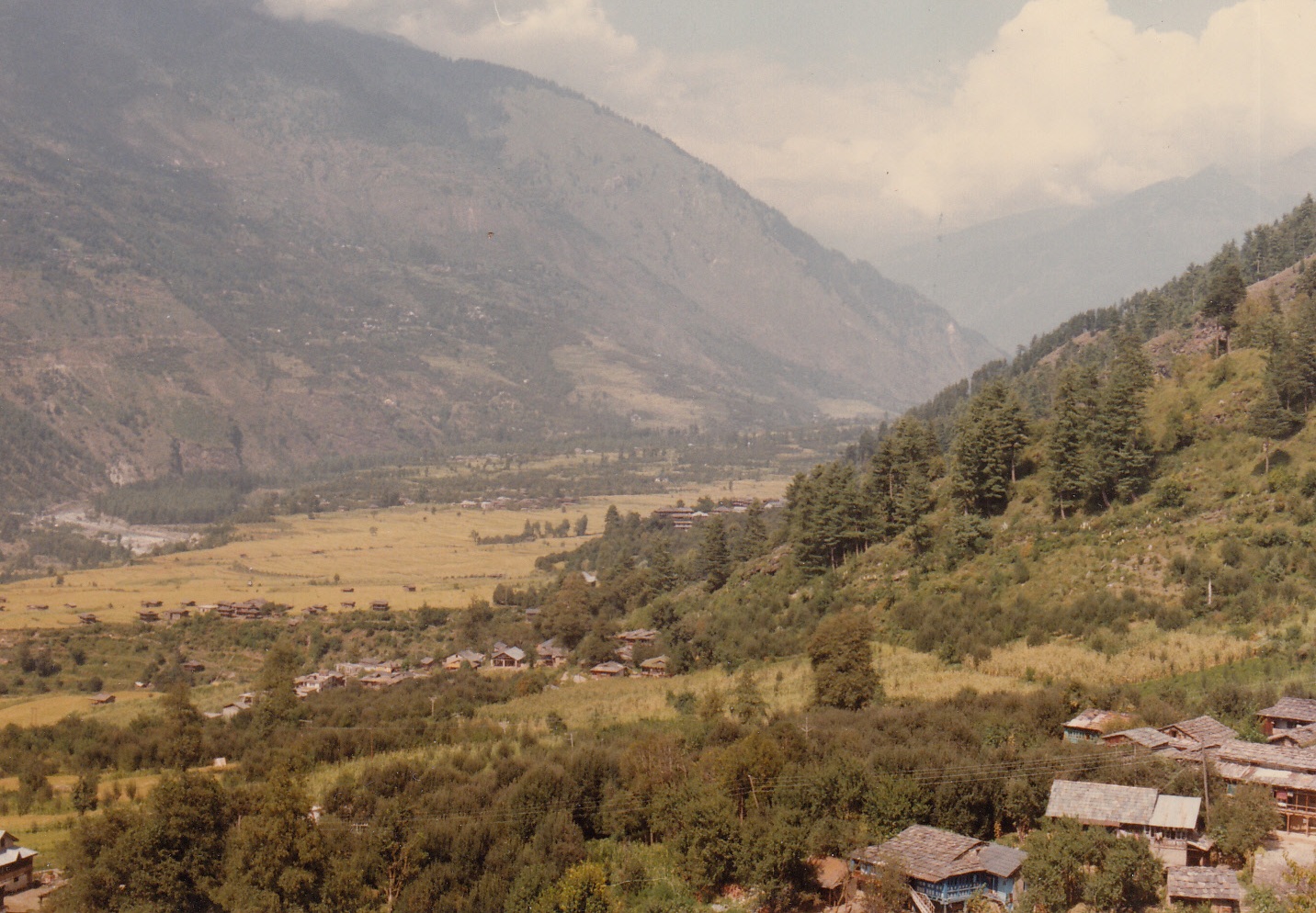
Add caption

In 1993, having slogged quite a bit in the Personnel Wing of the department, we decided to take a break and a holiday. We had covered most of the hill stations by the 1990s but we had not been to Manali. I had heard about Kulu and Manali when I was still in the College. As the trip was difficult not many would attempt it. We had a family friend who used to be a very good artist. He was most probably from Karnataka but was trained in Santiniketan when Tagore was around. He was so intensely influenced by Bengali culture that he would wear nothing other than hoti and kurta which Bengalis call
Panjabi. Having heard about the colourful Dussehra of Kulu he decided to take a trip and came back and told us about the beauty of the place. This must have been in very early 1950s.

Since then Kulu Valley was on my mind but could never make it – even when I was in Chandigarh. This time we decided to spend a week there and in order to have more time there we did not take the surface route.
Indian Airlines had introduced a flight from Delhi to Bhuntar which is about 10 kilometres away from Kulu. We took this opportunity and flew to Kulu, Of course, the flight was risky as the plane after leaving the plains of Punjab had to fly between two hills. Occasionally the hillsides came pretty close to the wing tips even though it was a small turbo prop plane. Obviously the passage chosen by the pilot was narrow and perhaps was tricky. But the flight was uneventful though not devoid of anxiety.

Kulu is a temple town and was known as “Dev Bhoomi” (God’s own land). There are temples from where one can get a panoramic view of
the valley. There are numerous temples that crowd around the place – some are in the valley and numerous on the hillsides. But we were not really interested in temples and hence we pushed off straight towards Manali. On the way, however, we stopped to take a look at the trout farm. Trouts were introduced here by the British and they flourished here as well as in Kashmir. I therefore saw a trout for the first time after leaving Kashmir five years ago. I had even had a piece of grilled trout along with friends. The
farm seemed to be doing well and it had a burgeoning population of the fish.

Manali town turned out to be haphazardly built overgrown village. It is here you see the effects of unplanned urbanization. And yet it is full of foreigners, especially Israelis.  One would come across foreigners almost everywhere. I came across a white man getting a haircut and a shave in high noon by the side of what might be called a main road. The barber had nailed a looking glass on a tree trunk and had placed a chair in front with a small table by his side for keeping his instruments. A
typical rustic setting that one comes across in rural India.

There was nothing much to do in Manali except enjoying the very pleasant climate. We made a trip to the river side, the river being Beas, one of Panjab’s five rivers. On another day we walked up to the Circuit House near which there was a dense growth of trees. Manali seems to have lost a lot of trees and hence this place near the Circuit House has become a sight to be seen. The place, indeed, looks quite bereft of trees.

We had to do the very popular tourism sight of Rohtang Pass. One cannot really go across this more than 13000 ft high pass. It is open only
up to a point for tourists who want a little feel of the Alpine climate and snow laden mountains. But we came across snow fields, small though they were, very soon after we left Manali. The winter had been harsh and snow was littered all around even in late April. Himachal Tourism has provided certain places on the way for fun and frolic for children. The Pass was closed and naturally we could not approach it. Now the road through Rohtang is an alternative route for Leh but one can face a traffic jam right at Rohtang because of heavy traffic of Army vehicles, commercial heavy
vehicles and tourist vehicles. And one has to obtain a permit to travel on this road to Rohtang. Tourists get the permit for only a day.

We also took a trip to Naggar, a town on the north bank of Beas River a short distance away from Manali. It used to be the capital of Kulu State at one time. It has a castle built by the former king which is now converted into a heritage hotel. Devika Rani and her husband Svetoslav Roerich had a house here which is now a Museum. It mostly contains his landscapes. He was known also as portrait painter and his portrait of Nehru is hung in the Central Hall of the Indian Parliament.  

From Naggar I could see down below a temple in the valley. The temple was like any another temple but smaller in proportion. What was peculiar about it that it was made of slate grey stones. On the way I had seen several structures – domestic and commercial – of this grey coloured slate stones. Construction of houses with these stones would not perhaps present many difficulties but to erect a temple, complete with its pointed spire, must have been very a labour intensive process hundreds of years ago


DISAPPEARING FREEDOM OF EXPRESSION

http://www.bagchiblog.blogspot.com Rama Chandra Guha, free-thinker, author and historian Ram Chandra Guha, a free-thinker, author and...